
 Português
Can shot blasting machines be used to clean metal surfaces?
Browse services
- Petroleum and Gas
- Which industries use shot blasting machines?
- Which industries typically use abrasive vacuum recovery systems?
- Is shot blasting machine operation environmentally friendly?
- What key features should you consider when choosing an industrial air-cooled dehumidifier?
- What are the advantages of using a shot blasting machine compared to manual methods?
- How to troubleshoot common problems with shot blasting machines?
- How to maintain an abrasive vacuum recovery system?
- How to maintain the high efficiency performance of industrial air-cooled dehumidifiers?
- What safety precautions should be observed when operating a shot blasting machine?
- Can shot blasting machines be used to clean metal surfaces?
- What are some common problems with industrial air-cooled dehumidifiers?
- What materials can be used as abrasives in a shot blasting machine?
15 Nov
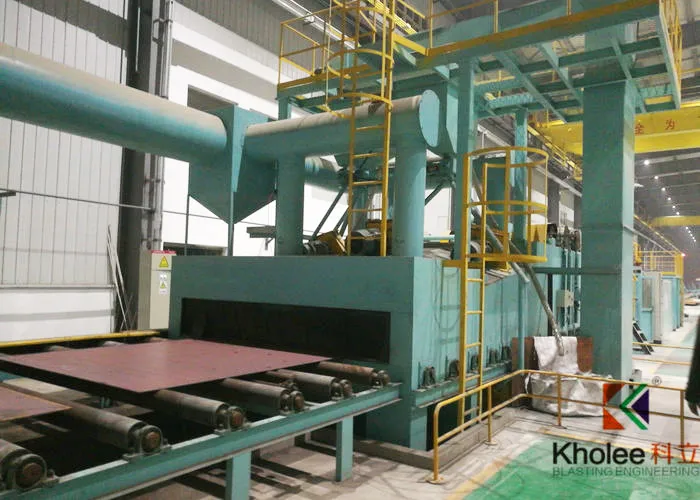
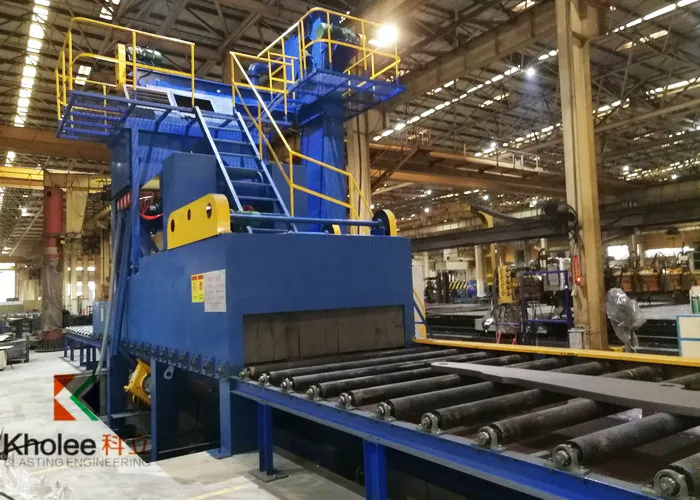
A shot blasting machine is a surface treatment equipment widely used in industrial production. It utilizes high-speed projected abrasive particles to impact, clean, and decontaminate metal surfaces. In this way, the shot blasting machine not only effectively removes rust, oxide layers, oil stains, and other impurities from the metal surface, but also improves the surface finish, hardness, and fatigue strength of the metal. As an efficient surface cleaning tool, shot blasting machines are widely used in various fields such as casting, machining, steel, shipbuilding, automobile manufacturing, and aerospace. For metal surface cleaning, the shot blasting machine can not only efficiently remove contaminants but also, in some cases, improve the adhesion of the metal surface, providing a better foundation for subsequent coating and painting processes.
This article will discuss in detail how shot blasting machines clean metal surfaces, including their working principles, application areas, advantages and disadvantages, and a comparison with other metal surface cleaning methods.
1. Working Principle of Shot Blasting Machines
The basic working principle of a shot blasting machine is to accelerate abrasive particles using a high-speed rotating impeller or high-pressure airflow, and then impact the workpiece surface at high speed. When the projected abrasive particles collide with the workpiece surface at high speed, they generate a strong impact force, which breaks down and removes rust, dirt, oil stains, oxide layers, and other substances attached to the workpiece surface.
By controlling parameters such as the type and size of abrasive particles, blasting pressure, and blasting angle, the shot blasting machine can achieve cleaning, decontamination, and strengthening treatment of different types of metal surfaces. The process usually includes the following steps:
Abrasive projection: Abrasive particles are accelerated and projected onto the workpiece surface through a blasting wheel or spray gun.
Impact and cleaning: High-speed projected abrasive particles impact the workpiece surface, removing attached rust, oxide layers, oil stains, welding spatter, etc., through strong impact force.
Recycling system: The abrasive particles that fall after blasting are collected, screened, and reused through a recycling system, reducing costs and improving operational efficiency.
Shot blasting machines can use a variety of different abrasives, such as steel shot, steel grit, aluminum shot, aluminum grit, quartz sand, and glass beads. Different types of abrasives can be selected according to the material, shape, and cleaning requirements of the workpiece.
2. Advantages of Shot Blasting Machines for Cleaning Metal Surfaces
As a metal surface cleaning equipment, shot blasting machines offer many advantages that traditional cleaning methods cannot match, mainly in the following aspects:
(1) High Efficiency
Shot blasting machines use high-speed abrasive particles to impact the workpiece surface, and the efficiency of removing surface contaminants is far higher than traditional methods such as manual cleaning and pickling. Especially in large-scale production, shot blasting machines can process multiple workpieces simultaneously, significantly improving production efficiency.
(2) Deep Cleaning
Shot blasting machines can penetrate into tiny gaps and pores on the metal surface for cleaning, especially suitable for workpieces with complex shapes, such as castings and welded parts. Because shot blasting machines can generate strong impact force, they can thoroughly remove oxides, rust, oil stains, etc. from the workpiece surface, even effectively removing firmly adhering contaminants.
(3) Uniformity
Shot blasting machines can achieve uniform cleaning of the workpiece surface in a relatively short time. Since the impact of abrasive particles can be evenly distributed across the entire surface, shot blasting machines can provide a highly consistent cleaning effect, especially suitable for surface cleaning work on large-scale production lines.
(4) Adjustability
The operating parameters of the shot blasting machine (such as blasting pressure, blasting angle, abrasive type and particle size, etc.) can be adjusted according to different metal surface cleaning needs. For example, some metals may require lighter cleaning treatment, while others require stronger impact force. The flexibility of the shot blasting machine allows it to adapt to a variety of metal surface cleaning needs.
(5) Environmental Friendliness
Compared with chemical cleaning methods (such as pickling), shot blasting is a dry physical cleaning method that does not involve the use of harmful chemicals. The waste generated during the shot blasting process is usually a mixture of abrasive particles and contaminants, and the abrasive particles can be reused through a recycling system, greatly reducing pollutant emissions and resource waste.
3. Applications of Shot Blasting Machines in Metal Surface Cleaning
Shot blasting machines are widely used in metal surface cleaning in various industries, especially for cleaning the following types of metals and their products:
(1) Cast iron and aluminum alloy products
Cast iron and aluminum alloys are prone to producing oxide scale, casting sand, and casting residue during the casting process. These contaminants not only affect the appearance of the workpiece but may also affect the accuracy of subsequent processing and the adhesion of coatings. Shot blasting machines can effectively remove oxide scale and casting sand from the surface of castings, providing a clean surface for subsequent processing.
(2) Steel and stainless steel products
Steel and stainless steel products usually generate rust and oxide layers during the manufacturing process, especially during long-term storage, where surface corrosion problems are particularly severe. Shot blasting machines, through strong impact force, can effectively remove rust and oxides from the surface, restoring the original luster of the metal and preventing further corrosion.
(3) Welded parts
During the welding process, welding spatter, slag, and welding stress adhere to the metal surface. These contaminants affect the quality and appearance of the welded joint. Shot blasting machines can effectively remove welding spatter and oxide layers, improving the flatness and smoothness of the workpiece surface.
(4) Automotive and aerospace components
Metal components in the automotive and aerospace industries often require high-precision surface cleaning to ensure the performance and lifespan of the components. Shot blasting machines can clean oil stains, rust, and contaminants from the surface of components, and are particularly suitable for cleaning body parts, engine parts, and structural components.
(5) Steel structures and machined parts
Steel structures and machined parts are prone to accumulating rust, oil stains, and oxide layers during manufacturing and processing, affecting subsequent coating adhesion and surface quality. Shot blasting machines can effectively remove surface contaminants, preventing problems such as peeling and detachment of subsequent coatings.
4. Limitations of Shot Blasting Machines in Metal Surface Cleaning
Although shot blasting machines have significant advantages in metal surface cleaning, they also have some limitations that need to be considered in practical applications:
(1) Not suitable for soft metals
Shot blasting machines are suitable for metal surfaces with higher hardness, and are particularly effective in cleaning materials such as cast iron and steel. However, for some soft metals (such as aluminum and copper), the abrasive particles of the shot blasting machine may damage the metal surface, causing unnecessary scratches. Therefore, special attention should be paid to selecting appropriate abrasives and blasting parameters when cleaning soft metals.
(2) Processing effect is greatly affected by abrasive quality
The cleaning effect of the shot blasting machine largely depends on the quality of the abrasive. The particle size, hardness, and shape of the abrasive particles all affect the shot blasting effect. If the abrasive is improperly selected or of poor quality, it may lead to incomplete cleaning, scratches on the workpiece surface, and other problems. Therefore, operators need to carefully select the appropriate abrasive according to the material, shape, and surface cleaning requirements of the workpiece.
(3) Cannot completely replace chemical cleaning methods
Although shot blasting machines can effectively remove most contaminants from metal surfaces, certain specific contaminants (such as stubborn oil stains and paint residue) may require the use of chemical cleaning methods in conjunction with shot blasting. For example, in some special industrial applications, it may be necessary to use pickling, solvent cleaning, and other methods in conjunction with shot blasting to achieve the best cleaning effect.
5. Precautions for cleaning metal surfaces with a shot blasting machine
When using a shot blasting machine to clean metal surfaces, operators should pay attention to the following points:
Select appropriate abrasives: Choose appropriate abrasives according to the properties of the metal material, the type of contamination, and the cleaning requirements. For soft metals, softer abrasive particles should be selected to avoid surface scratches.
Adjust blasting parameters: Adjust parameters such as pressure, angle, and speed according to different metals and types of contaminants. Excessive blasting pressure may cause damage to the workpiece surface, while insufficient blasting pressure may result in unsatisfactory cleaning effects.
Protect operators: Since splashing abrasive particles and dust may be generated during the shot blasting process, operators should wear appropriate protective equipment, such as safety glasses, earmuffs, and dust masks, to ensure safety.
Regular equipment maintenance: Regularly check the abrasive feeding system, blasting device, and recycling system of the shot blasting machine to ensure the equipment is functioning properly and to avoid affecting the cleaning effect due to equipment failure.
Summary
Shot blasting machines are efficient and flexible metal surface cleaning equipment that can quickly and thoroughly remove rust, oxide layers, oil stains, and other contaminants from metal surfaces. With proper operation and maintenance, shot blasting machines can significantly improve the surface cleanliness of metals, providing a good foundation for subsequent processing, coating, and corrosion protection. Despite its many advantages, in practical applications, it is still necessary to select appropriate abrasives and process parameters based on the material of the workpiece and the cleaning requirements to achieve the best cleaning results.
Recommended Products

Contact US
Product Information
Quantity
Unit
Piece
Support order samples, customization, wholesale direct, and complete payment. If the product you look for does not have corresponding customized content, pls fill out the form below to contact us, and we will reply ASAP.