
 Português
What is a shot blasting machine and how does it work?
Browse services
- Petroleum and Gas
- Which industries use shot blasting machines?
- Which industries typically use abrasive vacuum recovery systems?
- Is shot blasting machine operation environmentally friendly?
- What key features should you consider when choosing an industrial air-cooled dehumidifier?
- What are the advantages of using a shot blasting machine compared to manual methods?
- How to troubleshoot common problems with shot blasting machines?
- How to maintain an abrasive vacuum recovery system?
- How to maintain the high efficiency performance of industrial air-cooled dehumidifiers?
- What safety precautions should be observed when operating a shot blasting machine?
- Can shot blasting machines be used to clean metal surfaces?
- What are some common problems with industrial air-cooled dehumidifiers?
- What materials can be used as abrasives in a shot blasting machine?
03 Nov
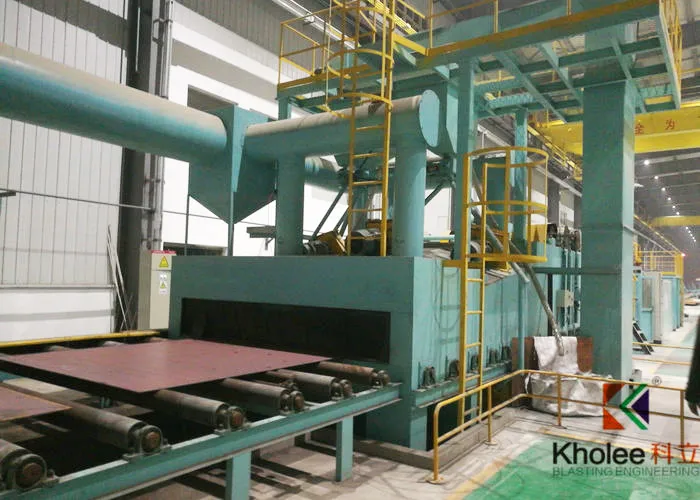
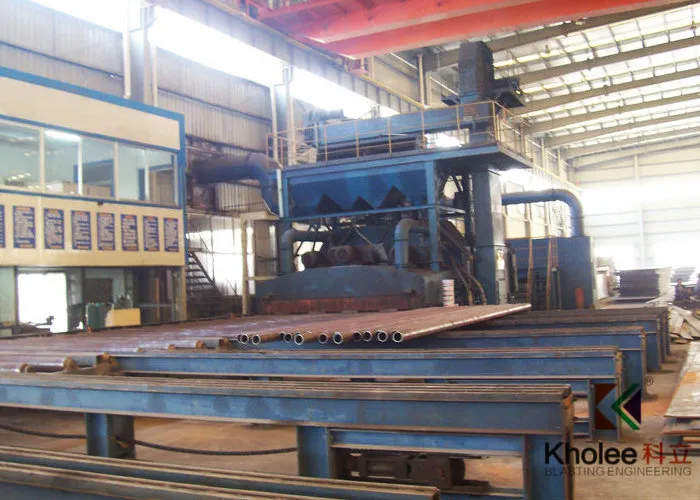
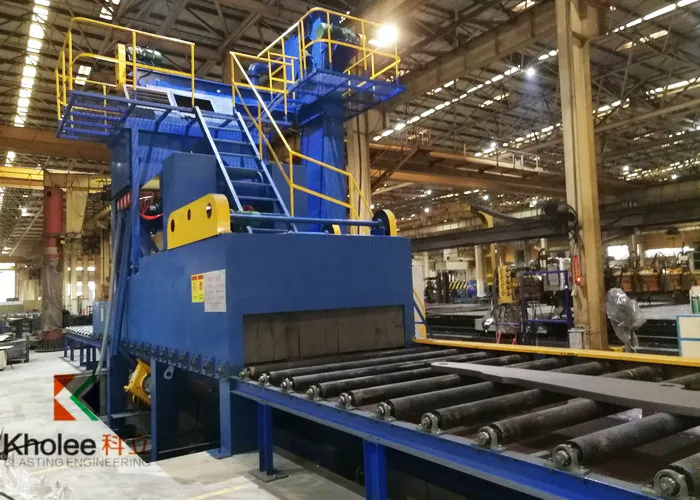
A shot blasting machine is a device that processes the surface of a workpiece by projecting small abrasive particles (usually steel balls, steel shot, aluminum shot, or other metal particles) at high speed. Its purpose is to clean, remove oxide layers, rust, oil stains, and other impurities through high-speed impact, or to improve the surface finish, hardness, and extend the service life of the material. This technology is widely used in industrial production, especially in metal processing, construction, aerospace, and automotive industries.
The working principle and structure of a shot blasting machine are relatively simple, but the underlying physical mechanisms and wide range of applications are quite complex. Below, we will provide a detailed introduction to shot blasting machines from the aspects of working principle, main components, common applications, advantages, and disadvantages.
Working Principle of a Shot Blasting Machine
The working principle of a shot blasting machine is based on the conversion of kinetic energy in physics. The core process is to accelerate abrasive particles using a high-speed rotating wheel or airflow inside the shot blasting machine, and then project these particles onto the workpiece surface at a very high speed. When the abrasive particles collide with the workpiece surface, they generate an impact force, thereby removing surface dirt, oxides, rust, and other impurities, or in some cases, creating a specific surface texture through continuous impact to improve the mechanical properties of the workpiece.
The specific working process is as follows:
Abrasive supply: A shot blasting machine usually has a dedicated abrasive storage bin for storing the abrasive material. The abrasive material can be steel shot, aluminum shot, glass beads, etc., which have good recyclability and reusability.
Abrasive acceleration: The abrasive material is accelerated by airflow or a mechanical acceleration device (such as a blasting wheel, centrifugal wheel). The blasting wheel is usually electrically driven, and it sends the abrasive particles into the blasting path through high-speed rotation.
Blasting and impact: The accelerated abrasive particles are projected onto the workpiece surface, and the particles collide violently with the surface, generating a large impact force. This impact force can remove surface impurities, or, through elastic deformation, create tiny pits and micro-cracks, improving the surface hardness and strength.
Abrasive recycling: During the blasting process, the abrasive material is partially recycled after contacting the workpiece surface. Most shot blasting machines are equipped with an abrasive recycling system that collects the used abrasive material back into the storage bin for reuse.
Main Components of a Shot Blasting Machine
The core components of a shot blasting machine mainly include the following parts:
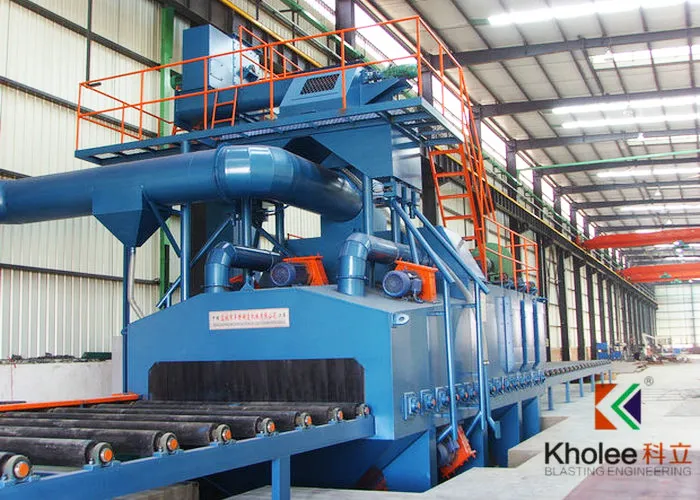
Blasting device (blasting wheel or spray gun): This is the most important part of the shot blasting machine, responsible for accelerating and spraying the abrasive material onto the workpiece surface. Blasting devices can be divided into centrifugal wheel type and airflow type. The centrifugal wheel type accelerates the abrasive material through rotating blades, while the airflow type uses air pressure to propel the abrasive material.
Abrasive recovery system: To save costs and improve efficiency, shot blasting machines are equipped with an abrasive recovery system. This system recovers the sprayed abrasive material through screens, airflow, or vibration, and then screens and cleans it for reuse.
Dust removal system: During the shot blasting process, a large amount of dust is generated when the abrasive material collides with the workpiece surface. This dust needs to be removed promptly to ensure the health of workers and the normal operation of the equipment. Shot blasting machines are usually equipped with dust removal equipment, such as high-efficiency dust collectors and filtration devices.
Control system: Most modern shot blasting machines are equipped with intelligent control systems that can monitor and adjust parameters such as the machine's working status, abrasive material feed rate, and blasting pressure in real time.
Housing and working chamber: To prevent abrasive material from splashing and polluting the surrounding environment during the blasting process, most shot blasting machines are designed with a closed working chamber or housing. These housings effectively prevent the dispersion of abrasive material and ensure the safety of operators.
Common Applications of Shot Blasting Machines
Shot blasting machines are widely used in several fields, mainly including the following:
Metal surface treatment: Shot blasting technology is often used for surface treatment of metal materials such as steel and aluminum alloys, removing oxide layers, rust, welding spatter, and other impurities. Shot blasting can improve the surface roughness of metals, enhance the adhesion of coatings, and thus extend the service life of metal materials.
Cleaning of castings and forgings: Shot blasting machines are used to clean sand particles, oxides, and other impurities from the surface of castings or forgings. Shot blasting enables these parts to achieve a higher degree of cleanliness, ensuring the quality of subsequent processing and coatings.
Automotive industry: In the automotive manufacturing process, shot blasting machines are used for surface treatment of car bodies, chassis, and engine components. Shot blasting helps remove impurities after welding or casting and improves the fatigue resistance of the components. Aerospace: Shot blasting is used in the aerospace industry to treat metal components such as engine parts and aircraft hulls, preventing corrosion and improving their structural strength and durability.
Construction and Engineering: In the construction industry, shot blasting is commonly used for surface treatment of steel structures, removing rust and other contaminants to improve the durability and corrosion resistance of the steel structure.
Concrete Surface Cleaning: Shot blasting technology can also be used to clean concrete surfaces, especially in prestressed concrete. Shot blasting can remove some impurities and cracks from the surface, thereby enhancing the compressive strength of the concrete.
Advantages and Disadvantages of Shot Blasting Machines
Advantages:
Efficient Cleaning: Shot blasting machines can quickly and thoroughly clean the surface of workpieces, significantly improving production efficiency.
Improved Surface Performance: Shot blasting can improve the strength, hardness, wear resistance, and fatigue resistance of the workpiece surface. For metal materials, shot blasting can also reduce stress concentration on the surface and prevent crack formation.
Wide Range of Applications: Shot blasting machines can not only process metal parts but also be used to clean the surfaces of various materials such as concrete, plastics, and glass.
Good Environmental Performance: Through the recycling and reuse of abrasives, shot blasting machines reduce abrasive waste, and the equipped dust removal system can effectively reduce environmental pollution.
Good Surface Uniformity: Shot blasting technology can achieve high-precision surface treatment, ensuring the consistency and uniformity of the workpiece surface.
Disadvantages:
High Equipment Investment: The initial investment in shot blasting machines is relatively high, especially for large automated equipment, which may increase the equipment procurement costs for enterprises.
Faster Abrasive Wear: Although abrasives can be recycled and reused, they will wear out during the blasting process and need to be replaced regularly.
High Operating Requirements: The operation of shot blasting machines requires professional technicians for operation and maintenance, and the equipment must be regularly inspected and maintained to ensure its efficient operation.
High Noise Level: During the shot blasting process, due to high-speed impact, the equipment may generate considerable noise, requiring measures to reduce noise pollution.
Summary
Shot blasting machines are efficient and reliable surface treatment equipment widely used in multiple industrial fields. Through high-speed abrasive impact, shot blasting machines can effectively remove impurities, rust, or oxides from the surface of workpieces and improve the surface performance of the material. It not only improves production efficiency but also enhances the service life and quality of the product. Although shot blasting machines have some drawbacks, such as high investment costs, abrasive consumption, and operational difficulties, their importance and widespread application in industrial production still make them an indispensable piece of equipment.
With continuous technological advancements, shot blasting machines are constantly evolving towards greater intelligence, environmental friendliness, and efficiency, and will play an even more important role in more industries and fields in the future.
Recommended Products

Contact US
Product Information
Quantity
Unit
Piece
Support order samples, customization, wholesale direct, and complete payment. If the product you look for does not have corresponding customized content, pls fill out the form below to contact us, and we will reply ASAP.